Section Editors

  • Peter-Bram 't Hoen, Leiden University Medical Center
  • Shane C Burgess, University of Arizona
  • David Burt, University of Edinburgh
  • Tom Coenye, Universiteit Gent
  • John K Colbourne, The University of Birmingham
  • Takashi Gojobori, National Institute of Genetics
  • Ivo G Gut, Centro Nacional de Analisis Genomico, Barcelona
  • Albert Heck, Utrecht University
  • Scott E Hemby, Wake Forest University
  • Vishwanath Iyer, University of Texas at Austin
  • Hans Lehrach, Max Planck Institute for Molecular Genetics
  • David Lightfoot, Southern Illinois University at Carbondale
  • Brian Oliver, National Institutes of Health
  • Paul Pavlidis, University of British Columbia
  • Daniel Sargent, Fondazione Edmund Mach - IASMA
  • Leonard Schalkwyk, King's College London

Executive Editor

  • Kate Rice, BioMed Central

Articles

There has been an error retrieving the data. Please try again.
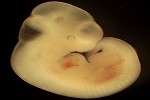
  • Image attributed to: Figure 1, Prado-Martinez, et al., 2013

    Wild albino gorilla Snowflake is inbred

    A phenotypically unique gorilla carries a private non-synonymous substitution in a transmembrane domain in SLC45A2, one of the candidate genes associated with the OCA4 class of albinism

    BMC Genomics 2013, 14:363
  • Image attributed to: Taken from Figure 2, Kang et al., 2013

    Chicken ovary miRNA profiles

    Using a small RNA deep sequencing method on sexually immature and mature chicken ovaries differentially expressed miRNAs were identified and validated, including gga-miR-1a and gga-miR-21 thereby indicating a role in the follicular growth or ovulation mechanism.

    BMC Genomics 2013, 14:352
  • Genomic insights into Geospiza

    204 years after Charles Darwin’s birth, sequencing of the genome of the Darwin’s Finch Geospiza magnirostris reveals over 13,000 predicted genes, of which two under positive selection may have contributed to beak morphology evolution, which so interested Darwin.

    BMC Genomics 2013, 14:95
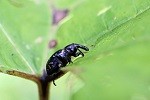
  • Image attributed to: By AxelBoldt (Own work) [Public domain], via Wikimedia Commons

    Rubber tree draft genome reported

    The draft genome of the rubber tree Hevea brasiliensis is almost 80% repetitive DNA with 12.7% of genes models identified being unique to this species, including key rubber biosynthesis and disease resistance genes

    BMC Genomics 2013, 14:75
  • View more articles  

RSS

Comments

View more comments

RSS

News from the web

Scope

BMC Genomics is an open access, peer-reviewed journal that considers articles on all aspects of genome-scale analysis, functional genomics, and proteomics.

It is journal policy to publish work deemed by peer reviewers to be a coherent and sound addition to scientific knowledge and to put less emphasis on interest levels, provided that the research constitutes a useful contribution to the field.

Join the Editorial Board!

Are you interested in becoming an Editorial Board member for BMC Genomics and helping to maintain the editorial standards and ethos of this growing journal? To volunteer as an Associate Editor, please simply contact us at bmcgenomics@biomedcentral.com, enclosing a summary of your research interests and relevant expertise. We look forward to hearing from you.

Latest supplements

Volume 14 Suppl 3 (27 May 2013)

SNP-SIG 2012: Identification and annotation of SNPs in the context of structure, function, and disease

Research and reviews
Long Beach, CA, USA. 14 May 2012

Volume 14 Suppl 2 (15 February 2013)

Selected articles from ISCB-Asia 2012

Research
Shenzhen, China. 17-19 December 2012

Volume 14 Suppl 1 (21 January 2013)

Selected articles from the Eleventh Asia Pacific Bioinformatics Conference (APBC 2013): Genomics

Proceedings
Vancouver, Canada. 21-24 January 2013

View all supplements